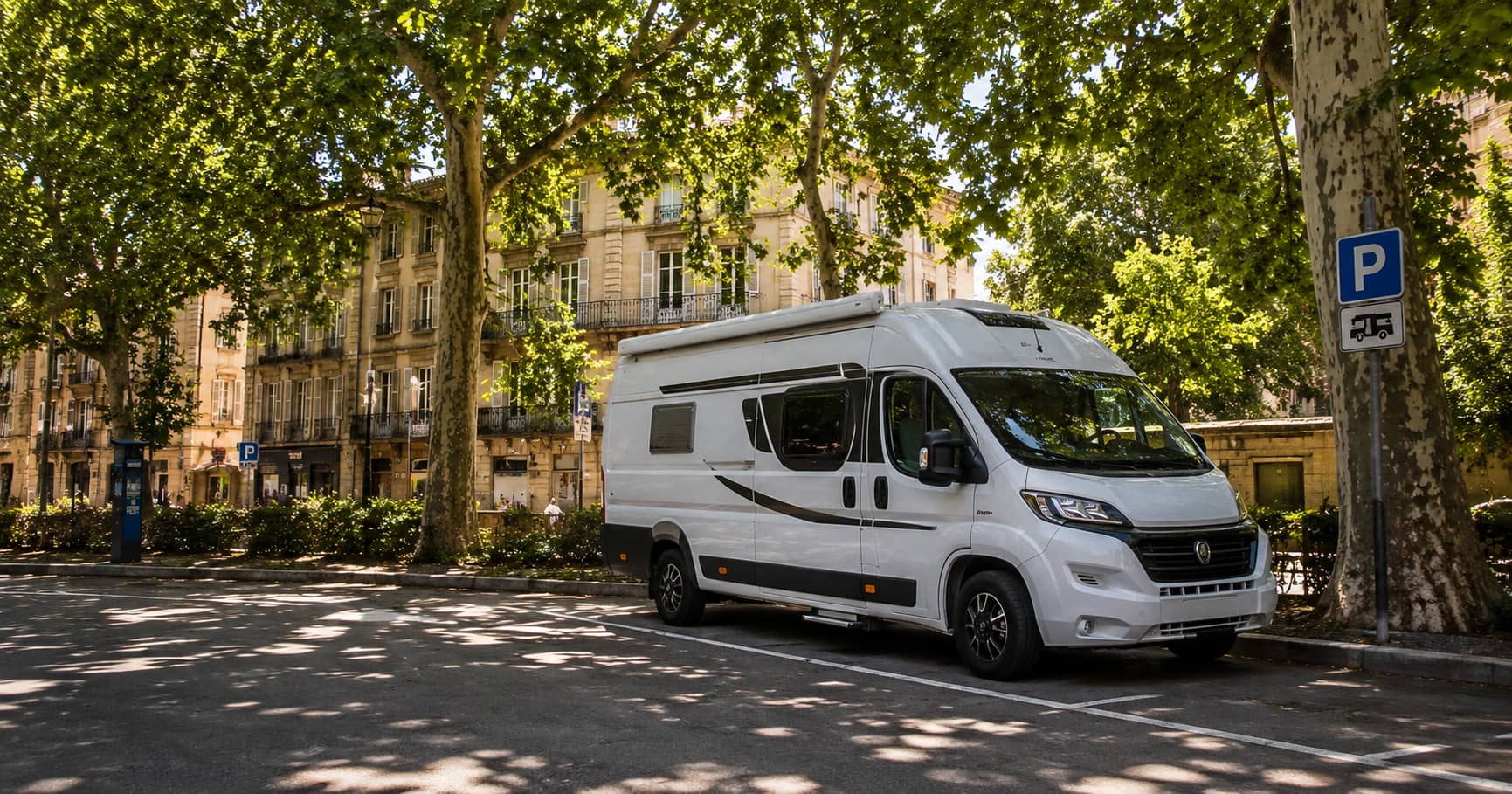
Aix-en-Provence is easy to enjoy on foot and awkward to approach in a large vehicle. The historic centre has narrow streets, controlled access and underground car parks designed mainly for ordinary cars. A campervan trip works better when you separate two decisions: where the vehicle can stay legally and where you begin the city visit.
This guide focuses on that practical split. It explains why driving directly to Cours Mirabeau is usually a poor plan, how park-and-ride sites can help, and what to check before using a commercial car park. Rules, barriers and operating conditions can change, so confirm the current details on the day rather than treating any individual parking place as permanent advice.
Start with the dimensions written on the vehicle
Know the exact height, length, width and authorised gross vehicle weight before entering Aix. Do not rely on memory or the advertised model name, because roof boxes, solar panels, vents and bicycle racks can change the real dimensions. Keep the measurements near the dashboard. A height barrier leaves no room for guesswork, and a long rear overhang can make a technically wide entrance difficult to turn through.
The city applies vehicle restrictions in parts of the centre, and access for vehicles above 3.5 tonnes can be limited. Even a smaller van may struggle with delivery traffic, one-way streets and pedestrians. The safe default is to avoid the old centre unless an official source clearly confirms that your route and destination accept the vehicle.
Use a campsite or authorised motorhome area for the overnight stay
A central parking bay is not a substitute for an overnight base. For sleeping, setting out chairs, opening an awning or using levelling blocks, choose an authorised campsite or motorhome area whose rules allow those activities. The Aix tourist office lists local camping and campervan options, including established sites on the edge of the city and in the surrounding countryside.
An authorised base also solves practical problems that urban parking cannot: fresh water, toilets, electrical hookups, waste disposal and a secure place to leave outdoor equipment. It allows you to visit Aix with a smaller day bag rather than carrying valuables around town or leaving obvious luggage visible in the vehicle.
Park-and-ride is usually the cleanest city strategy
Aix operates park-and-ride facilities at main approaches to the city. The official tourism information describes them as staffed sites linked to frequent buses, with city transport included for the driver and passengers under the relevant parking arrangement. This can remove the hardest part of the visit: searching for a large central bay while reading unfamiliar signs.
Do not assume every park-and-ride accepts every campervan. Check opening hours, height limits, vehicle category rules and whether overnight parking is prohibited. Arrive during staffed hours when possible, show the vehicle dimensions if uncertain and ask which bay to use. A short conversation is safer than testing a barrier with a roof-mounted accessory.
Why underground parking is risky for campervans
Aix has thousands of central parking spaces, but most are in structures with height and turning limits. Rotonde is an example of why the details matter: its official listing mentions an oversize level with a maximum height of 3 metres and length of 7 metres, yet specifically excludes camping cars. A sign that appears to accept tall vehicles therefore does not automatically mean it accepts your vehicle category.
Underground parking also creates other issues. Spiral ramps can be tight, bicycle racks increase length, and roof equipment may sit higher than the manufacturer’s body height. If the entrance information is incomplete, turn away before entering. The cost of a bus from an outer parking area is minor compared with bodywork damage or blocking an access lane.
A simple arrival routine
Plan the final 20 kilometres before you leave the campsite Wi-Fi. Save the intended parking location, one legal alternative and the route back to your overnight base. Avoid arriving during the busiest market or commuter period. On approach, follow current road signs rather than blindly accepting a navigation app’s shortcut through the centre.
After parking, photograph the bay number, payment conditions and closing time. Remove loose equipment, close roof vents, hide valuables and take drinking water. Aix is a compact walking city, so there is little advantage in placing a large vehicle close to every sight. The useful goal is a reliable exit, not the shortest possible walk.
Match parking to the rest of your Provence plan
If Aix is your main base, choose a campsite with a practical bus, cycle or driving connection rather than judging it only by distance on a map. The guide to camping locations near Aix explains how different positions affect day trips and city access. A slightly more distant pitch can be easier if it avoids repeated congestion.
Before departure, consult the official Aix park-and-ride information and the current parking pages. Treat dimensions and category restrictions as firm limits. The best campervan visit to Aix is the one where the vehicle becomes irrelevant for a few hours and you can explore the centre on foot.