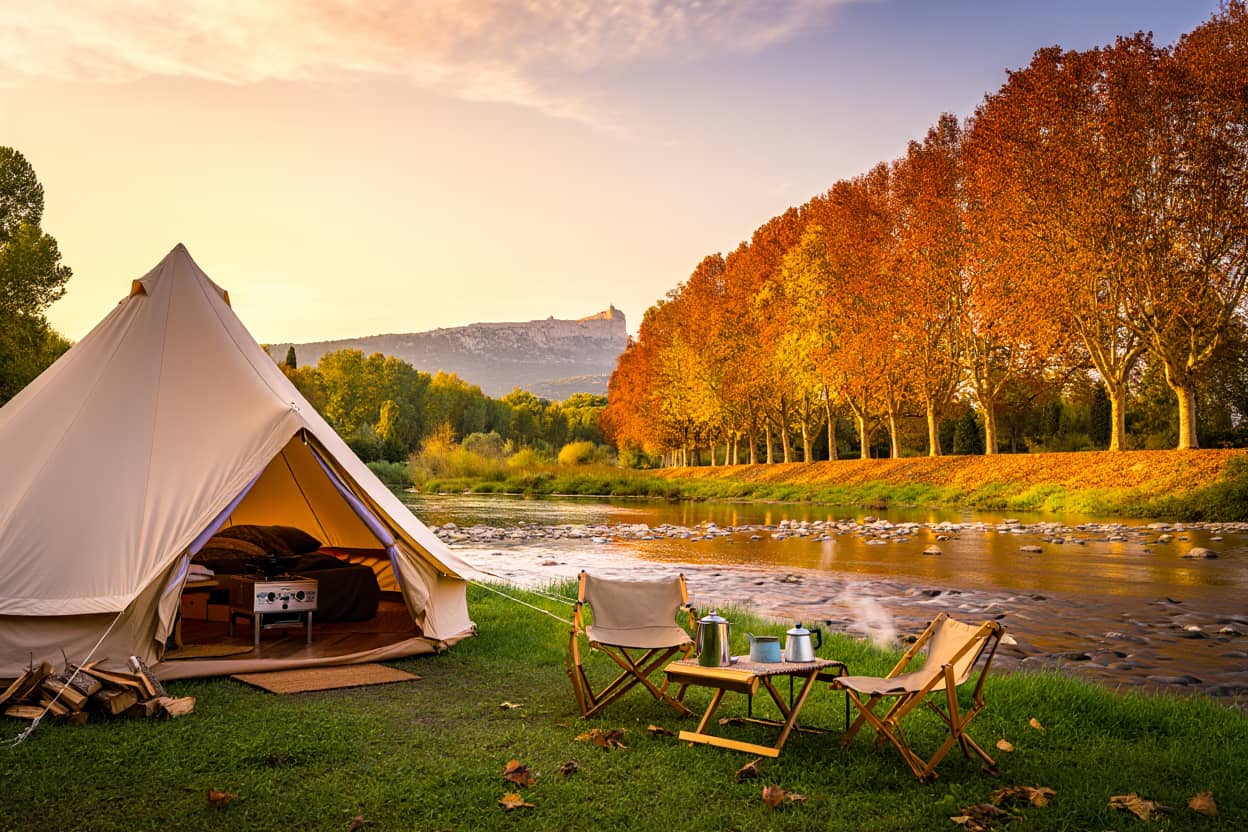
Camping in Provence works best when you treat it as a practical outdoor stay, not as a cheaper version of a hotel trip. The region can give you easy town access, limestone hills, markets, warm evenings, pine shade and short drives to major sights, but it also asks for planning. Summer heat, fire-risk closures, narrow roads and busy coastal spots can quickly turn a simple trip into a tiring one. For a first visit, the safest base is often inland, around Aix-en-Provence, where you can mix city walks, Sainte-Victoire, Marseille access and quieter countryside days.
The first choice is accommodation style. A tent gives the classic camping feel, but it requires better heat planning, good bedding and a shaded pitch. A mobile home gives more comfort, especially with children, because you usually get proper beds, a small kitchen and more protection from wind or hot nights. A campervan or motorhome gives flexibility, but it also adds parking limits, height barriers and route planning. For a first Provence trip, many families prefer a campsite base for several nights instead of moving every day.
Location matters more than a long facility list. A good base near Aix-en-Provence gives you access to food shops, markets, buses, cultural sights and nature without relying only on long drives. Aix is also useful because the tourist office lists regional public transport options, including bus and train networks, which can help you reduce city parking stress during peak months. You can check current transport options through the Aix-en-Provence Tourist Office transport page before fixing your plan.
For timing, late spring and early autumn are often easier than high summer. April, May, June, September and October usually suit travelers who want walking, markets and outdoor meals without the hardest heat. July and August can still work, but they require a slower rhythm: early starts, shaded afternoons, pool time and no ambitious midday hikes. If your post date or trip plan falls near early summer, build your route around mornings and evenings rather than trying to copy a city-break itinerary.
First-time campers should also understand that Provence is not one simple area. Aix and Sainte-Victoire feel different from the coast, the Luberon, the Alpilles and the Verdon area. This is good for variety, but it can lead to overplanning. A better first itinerary is simple: one day for Aix, one for Sainte-Victoire, one for Marseille or the Calanques, one for a village or market route, and one quiet day at the campsite. You will enjoy the area more if every day is not a transfer day.
Packing should focus on heat, shade and daily comfort. Bring refillable bottles, hats, breathable clothing, sandals for campsite use, walking shoes, a small first-aid kit, insect protection, a torch and a compact bag for market shopping. If you are camping with children, add simple evening layers, pool shoes and quiet activities for hot afternoons. Do not rely on buying everything on arrival. Provence has good shops, but campsite stores can be limited or more expensive.
Rules also matter. France has many campsites and motorhome areas, but isolated camping is restricted or forbidden in many places, especially where fire risk or environmental protection applies. The European Consumer Centre explains that wilderness camping in France is forbidden or strictly limited and may require the owner’s agreement. Read its camping in France guidance before assuming that any scenic roadside stop is allowed.
The best first Provence camping trip is not the one with the longest checklist. It is the one that balances outdoor comfort, local food, short travel times and realistic weather planning. Choose a base carefully, keep the first route compact, use official information before visiting protected areas, and leave room for slow mornings. That is how a campsite stay near Aix can become a calm way to understand Provence rather than a rushed tour of disconnected places.