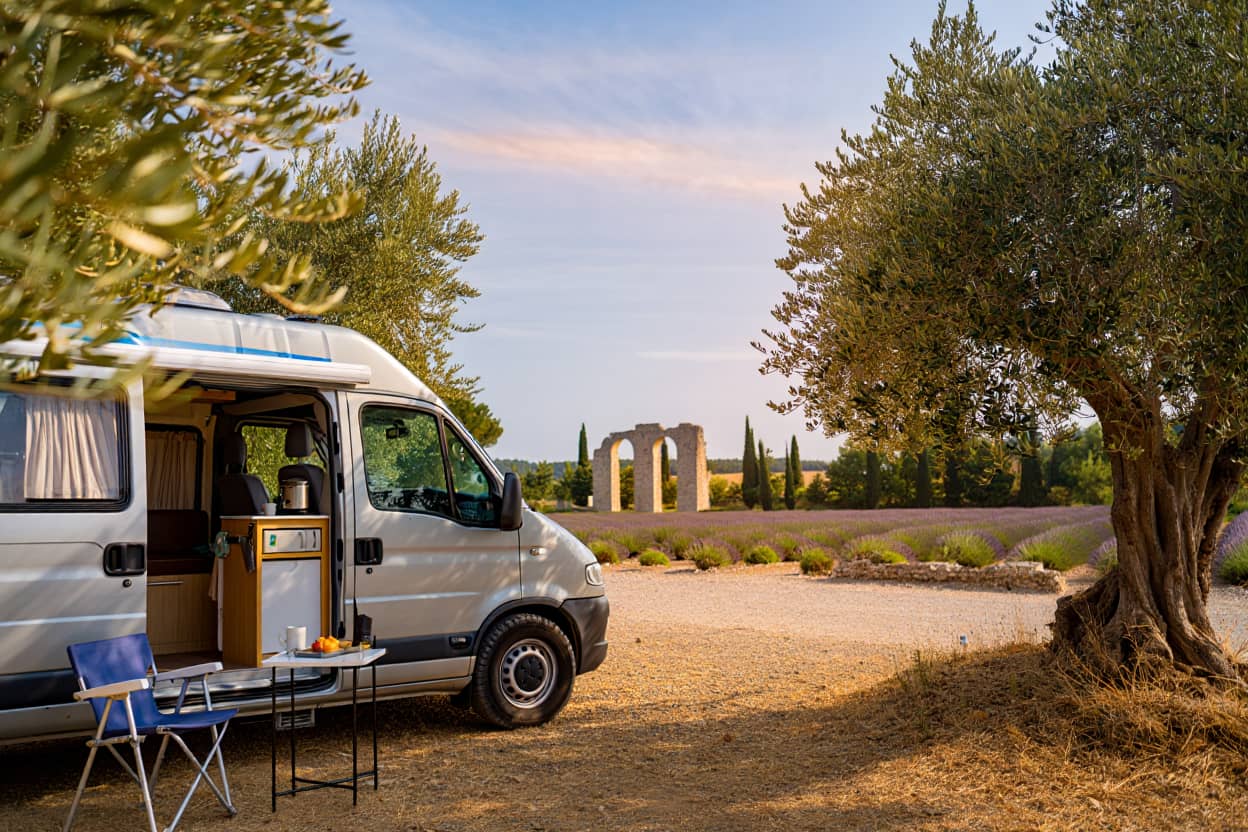
Summer camping in Provence can be rewarding, but heat must shape the whole plan. This is not alarmism. It is basic travel judgment. The French ecological transition ministry warns that heatwaves in France are becoming more frequent, earlier, harder and longer, and official advice focuses on hydration, staying cool and adapting activity. Before a July or August stay, read current guidance such as the French government page on how to stay safe during heatwaves.
The first rule is to build the day around temperature, not around a sightseeing list. In summer, mornings are for walks, markets and short drives. Midday and early afternoon are for shade, pool time, indoor breaks or quiet campsite tasks. Evenings are for dinner, short city walks or village visits. This rhythm is especially important if your plan includes children, older travelers or anyone not used to Mediterranean heat.
Accommodation choice matters. A tent can feel very hot if it has poor shade or ventilation. A mobile home can be more comfortable, but only if it has usable shade, cross-ventilation or cooling. Campervans can heat up quickly when parked in full sun. When booking, ask about pitch shade, tree cover, pool hours, quiet hours and whether the accommodation faces direct afternoon sun. A slightly less scenic shaded pitch can be better than a beautiful exposed one.
Water planning should be automatic. Every person needs a refillable bottle, and the group should carry more than it expects to drink. Children often forget to drink until they are already tired. Add salty snacks, fruit and regular breaks. Do not wait until someone feels unwell. If you are going to Sainte-Victoire, Valensole or the Calanques, assume there may be long sections without services and prepare before leaving.
Fire risk is another summer reality. Dry vegetation, wind and high temperatures can lead to access restrictions in natural areas. The Marseille tourism office notes that from 1 June to 30 September, access to the Calanques massif is regulated by prefectural order because of fire risk. Always check the latest conditions before setting out, especially if you are planning a coast or forest trip. The Calanques access rules page is a useful starting point.
Do not plan hard hikes in the hottest part of the day. Sainte-Victoire, for example, can look close and manageable from Aix, but limestone terrain, sun exposure and limited shade can make it demanding. If you want mountain views in summer, choose early starts, short routes or lower viewpoints. For first-time visitors, a scenic morning drive or easy walk may be smarter than trying to reach a summit.
Food also needs heat-aware planning. Shop early, keep cold items in a proper cool bag, and avoid leaving groceries in a parked car. Campsite cooking should be simple: salads, bread, fruit, cheese, pasta, grilled vegetables where permitted, and meals that do not require long cooking in a hot enclosed space. Heavy restaurant lunches can make afternoon heat feel worse, especially if you still need to drive.
The goal is not to avoid Provence in summer. The goal is to stop pretending summer behaves like spring. If you plan mornings carefully, respect access restrictions, use shade, drink water and keep afternoons slow, a camping stay can still work well. Heat becomes dangerous when travelers ignore it. It becomes manageable when it guides the itinerary from the start.