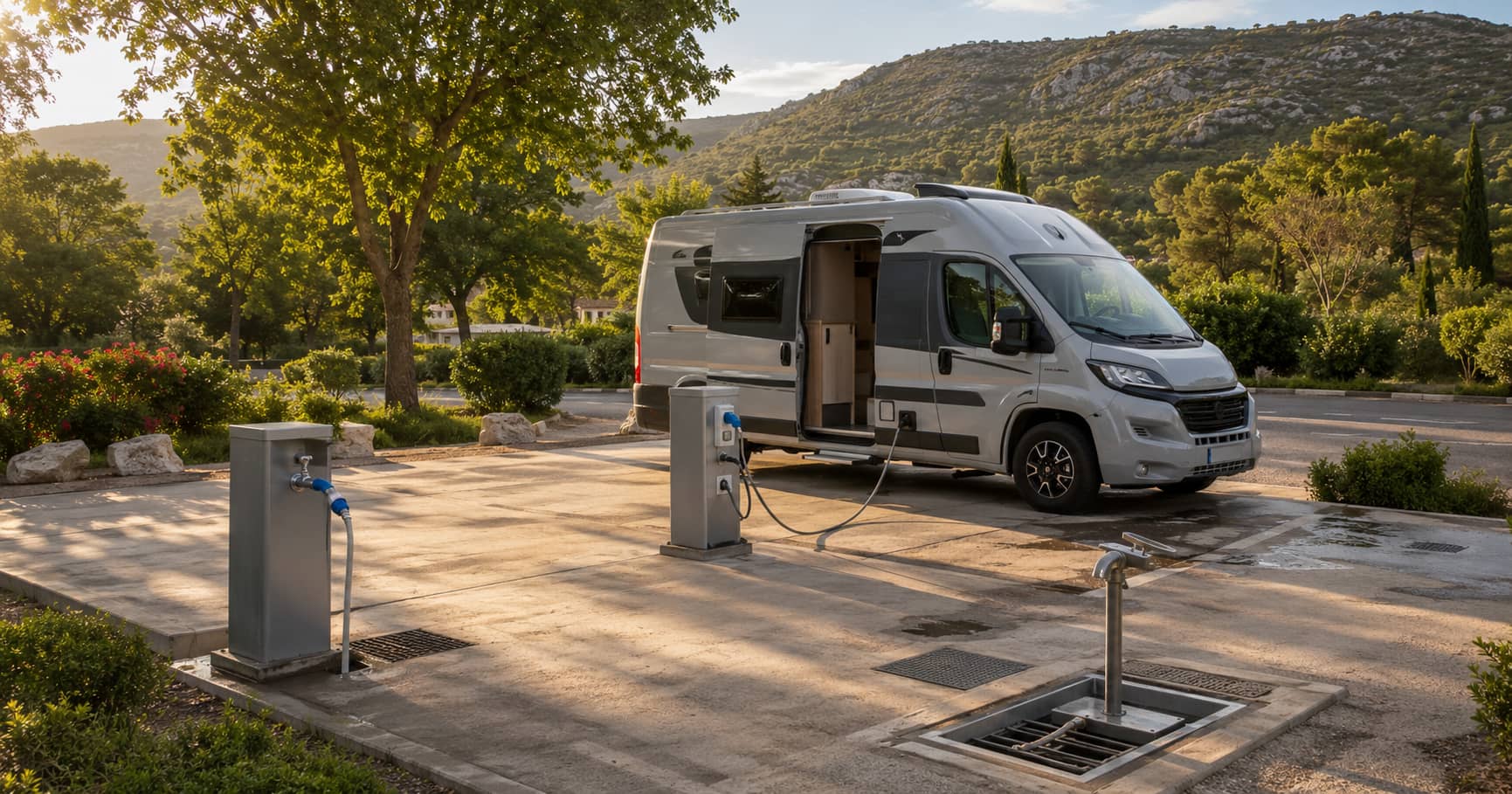
Campervan Water, Electricity and Waste in France: A Service Guide
A campervan can operate independently only for a limited time. Fresh water runs out, batteries discharge and waste tanks fill. Provence has campsites and service areas that can solve these needs, but travellers should arrive with compatible equipment and use only authorised disposal points.
This guide covers the operating routine rather than a specific brand of vehicle. Consult the manufacturer’s manuals for tank capacity, electrical limits and winter procedures. If any gas or mains-electricity component is damaged, stop using it and seek qualified help.
Plan fresh water by measured use
Know the capacity of the fresh-water tank and estimate daily consumption for drinking, cooking and washing. Carry separate potable water for immediate drinking if the main tank’s cleanliness is uncertain. Refill only from a tap clearly intended for drinking water or vehicle service.
Use a food-grade hose and keep its ends clean. Do not let the fresh-water hose touch a toilet-disposal fitting. Flush the tap briefly if permitted, fill without leaving the connection unattended and coil the hose dry. A universal tap connector can help, but never force a fitting or damage the site’s equipment.
Dispose of grey and black water separately
Grey water from sinks and showers still contains soap, food particles and grease. Black water from a toilet cassette or holding tank requires a dedicated disposal point. Never release either onto the ground, into vegetation, a street drain or a normal drinking-water area.
Follow the arrows and written instructions at the service point. Wear gloves, avoid splashing and rinse only with the hose provided for waste handling. Close valves and caps before moving the vehicle. If a facility is full or out of order, keep the waste contained and use the next authorised point.
Connect to campsite electricity safely
European campsites commonly use blue CEE connections, but socket type, amperage and cable requirements vary. Use an outdoor-rated cable of suitable specification, fully uncoil it and keep connections off wet ground. Do not create a chain of domestic extension leads and travel adapters.
Check the pitch supply limit before using kettles, heaters or air conditioning. The available amperage may be lower than at home. Add appliance wattages and switch high-load devices off when necessary. If the breaker trips repeatedly, reduce the load and ask reception for help rather than altering protection devices.
Manage batteries between hookups
Track battery state with the vehicle’s proper monitor, not a rough guess from phone charging. Refrigeration, lights, fans, pumps and heating controls all consume power. Solar output falls with shade, cloud and shorter winter days, so a panel’s advertised rating does not guarantee daily independence.
Drive charging and solar systems should be installed and maintained correctly. Do not idle the engine at the pitch to charge batteries unless the site explicitly permits it; noise and exhaust affect neighbours. A serviced campsite hookup is usually the cleaner solution for a low battery.
Use a repeatable service routine
Service before both tanks reach their limits. A useful sequence is to empty black water, empty grey water, rinse the designated equipment, refill fresh water and inspect for leaks. Keep chemical products sealed and follow the toilet manufacturer’s dosage instructions.
Record where the next service point is before leaving. The campsite and aire comparison explains which stop types are more likely to support a full service. In winter, confirm that water is operating because exposed taps may be shut during frost.
Leave the facility ready for the next traveller
Clean spills, close lids and move the vehicle as soon as the service is complete. Do not wash the entire motorhome at a drinking-water point or block the bay while taking a break. Report a fault to the manager instead of improvising a bypass.
Good campervan service is simple because it is regular. Measure water, watch battery use and empty waste only in the correct place. That routine protects the vehicle, the campsite and the landscapes you came to visit.
Inspect the system for small leaks
After refilling, listen for a pump that continues running when every tap is closed. Check under sinks, around the boiler and near the tank for moisture. A small leak wastes water and can damage hidden furniture or insulation if it continues through the trip.
Watch the grey-water level during washing rather than waiting for an alarm. Food particles can block strainers and create odour, so wipe plates before washing and clean accessible filters according to the manufacturer’s instructions.
At an electrical hookup, inspect the cable before every use. Cuts, crushed insulation, overheated plugs or loose pins require replacement, not tape. Disconnect at the supply before handling the vehicle end and keep the cable route visible.
Record tank capacities and typical daily use after the first few nights. Real figures help you choose future service intervals and avoid carrying unnecessary water weight. A regular two- or three-day routine is more reliable than waiting for every system to reach its limit.