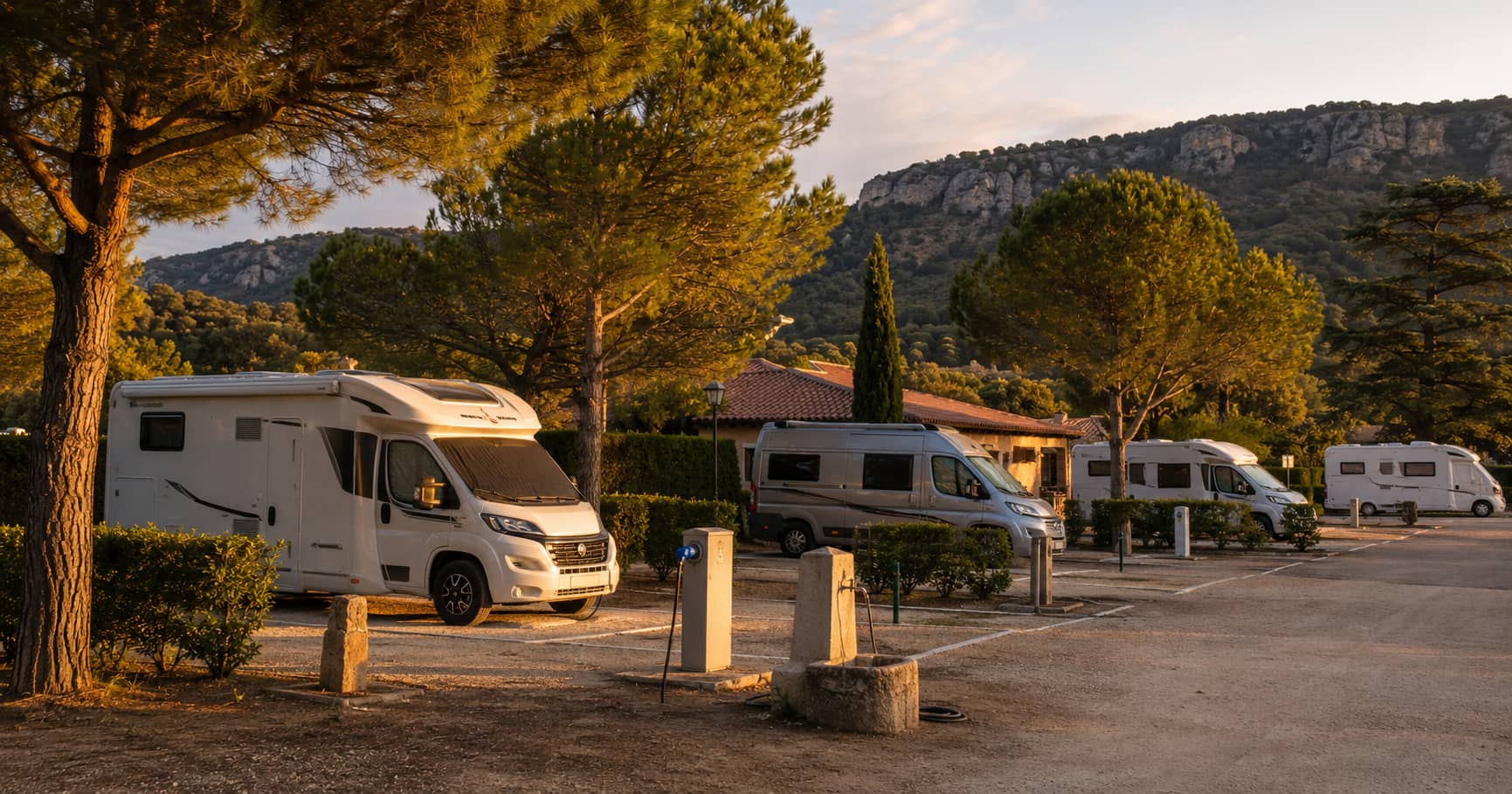
Campsites vs Campervan Aires in Provence: Which Should You Choose?
Provence offers several legal ways to stop overnight, but a campsite and a campervan aire are not interchangeable. A campsite is designed for living outdoors over one or more nights, while an aire may focus mainly on parking and basic vehicle services. Facilities, reservation rules and permitted behaviour vary widely, so choose according to what you need rather than the label alone.
The decision becomes especially important near Aix-en-Provence, where a fixed base can simplify city visits and day trips. A cheap overnight stop may suit a transfer, but it can create extra work if you need shade, showers, laundry and somewhere safe to leave the vehicle during a full day away.
What a full campsite usually provides
An organised campsite normally offers marked pitches or rental accommodation, toilets and showers, waste collection and some level of reception or site management. Many provide electricity, fresh water, laundry, a shop, pool or food service. These extras are useful for families, tent campers and travellers staying several nights.
A campsite also makes normal outdoor living clearer. Subject to site rules, you may be able to use chairs, a table and an awning within the pitch. Quiet hours, visitor rules and fire restrictions still apply. Ask what is included in the quoted price because electricity, extra people, pets and tourist tax may be separate.
What to expect from a campervan aire
An aire can range from a simple authorised parking area to a managed site with barriers, service points and numbered bays. Some allow only short stays. Others resemble basic campsites but without toilets or recreational facilities. The exact local rules matter more than the general term.
Do not assume that an aire permits campsite behaviour. Extending an awning, placing furniture outside, using levelling equipment or cooking beside the vehicle may be restricted. Read the sign at the entrance and keep the vehicle within its bay. An overnight parking right does not automatically include the right to occupy surrounding space.
Compare total cost rather than the headline fee
A low aire fee can be good value when you have your own bathroom, enough battery power and no need for shade. Add paid water, electricity, transport and laundry before comparing it with a campsite. A campsite farther from the centre may include bus access or reduce the need to move the vehicle every day.
For a one-night transfer, services you will not use have little value. For four nights near Aix, they may save time and fuel. The Aix campervan parking guide explains why leaving the touring vehicle at a proper base can improve a city day.
Think about weather and season
In summer, shade, safe electrical capacity and access to showers can justify a campsite. In autumn, drainage and a firm surface become more important. In winter, many campsites close, while some aires remain available with reduced or shut-off water service to prevent frost damage.
Wind exposure also matters. An open parking area may be uncomfortable in mistral, while a wooded campsite can introduce falling-branch risk. Review the forecast and position the vehicle according to site instructions. The mistral camping guide covers pitch and driving precautions.
Security and leaving the vehicle
Neither format guarantees security. A staffed campsite with controlled access may feel more suitable when you plan a long day trip, but you still need to lock the vehicle and hide valuables. An urban aire can be convenient yet busy, with people arriving late and leaving early.
Read recent official information and reviews for practical patterns, but do not treat one incident as proof that an entire category is unsafe. Look for lighting, access control, emergency contact details and a clear address that you can share. If the atmosphere feels wrong on arrival, move while it is still light.
Match the stop to the purpose of the night
Use an aire for a short legal stop when the vehicle is self-contained and you do not need outdoor space. Choose a campsite when the stay includes rest days, children, tent camping, extensive services or repeated day trips. Some travellers use both: campsites for the main base and aires between regions.
Before booking, confirm the vehicle size, arrival window, service availability and whether reservations are accepted. The best option is not always the cheapest or closest. It is the stop that lets you sleep, service the vehicle and follow local rules without improvisation.
Ask five questions before committing
Confirm whether toilets and showers exist, whether electricity is available, whether outdoor furniture is allowed, how long you may stay and how access works after reception closes. These five answers usually reveal whether the stop matches the night you are planning.
Also ask how payment works. Some aires use automated barriers or apps, while campsites may require arrival during reception hours. Keep a physical card and enough information to solve the process without blocking the entrance.
Read the cancellation and departure conditions. A campsite pitch may be reserved for several nights, while an aire may operate first come, first served. Your route needs a backup whenever arrival capacity is uncertain.