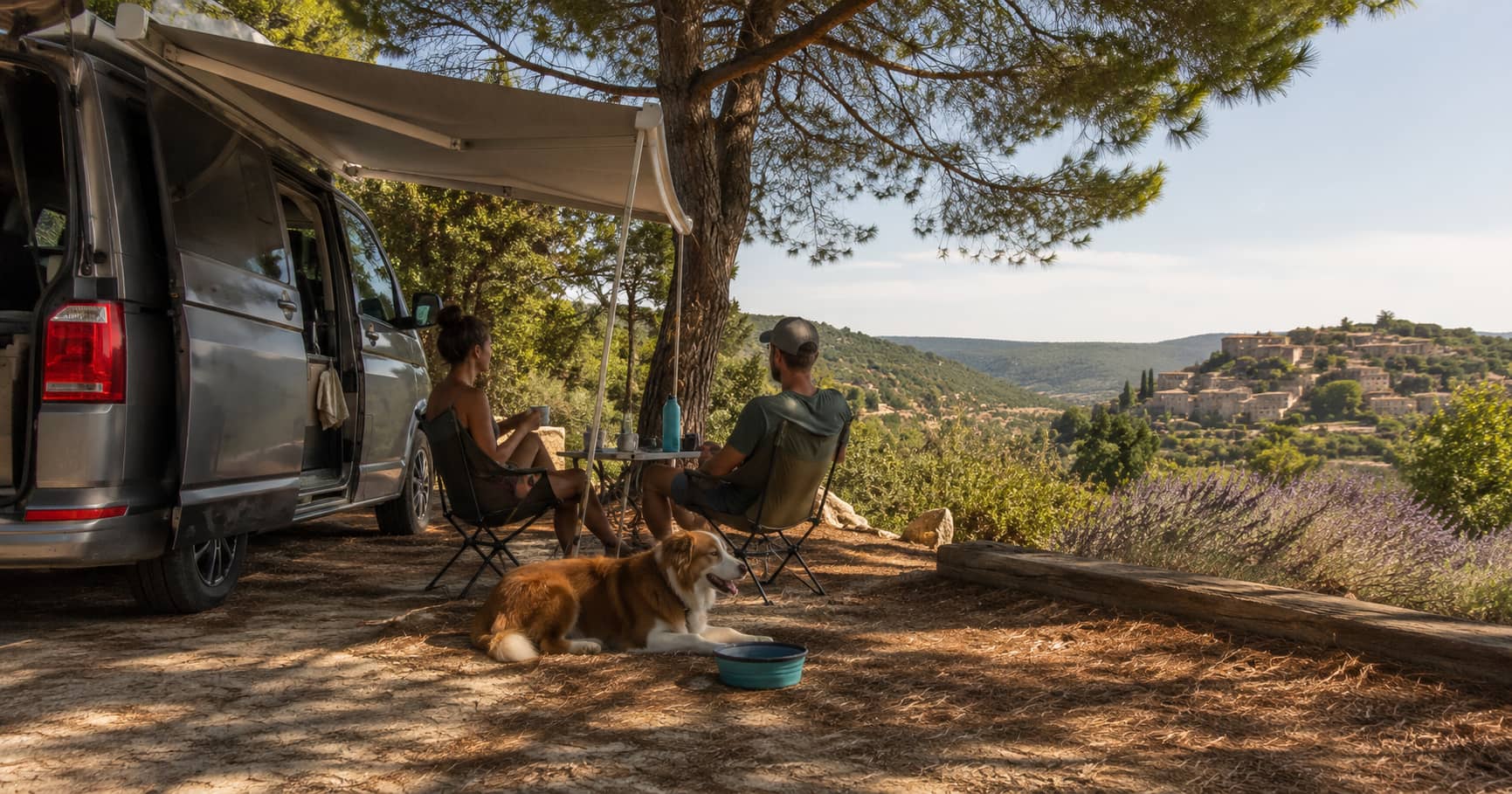
Camping in Provence with a Dog: Heat, Campsites and Day Trips
A dog can fit well into a Provence camping holiday, but the trip must be planned around heat, access rules and the animal’s normal routine. A shaded pitch in the morning can become hot by late afternoon, and a stone village walk that feels easy to a person may expose paws to dangerous surface temperatures.
The key questions are practical: does the campsite accept the dog in your chosen accommodation, where can the animal rest during outings, and which protected areas require a lead or restrict access? Do not rely on a general pet-friendly label. Ask about breed rules, fees, vaccination documents and where dogs are permitted on site.
Confirm the exact campsite policy
Some campsites accept dogs on pitches but not in every mobile home. Others limit the number, size or category of dog. Request written confirmation for your booking and check whether a lead is required throughout the grounds. Ask where the nearest suitable walking area is and whether there is a place to wash muddy or sandy paws.
Choose a pitch with reliable shade and airflow, but avoid tying the dog where the lead can reach a road or neighbouring pitch. Bring the usual bed, food and bowls to reduce stress. A portable water bowl should stay with the day bag rather than being packed deep inside the vehicle.
Plan every day around ground temperature
Walk early and late. Test pavement with the back of your hand and choose natural ground where possible. Keep the dog off exposed rock and dark asphalt during the hottest hours. Panting, weakness, confusion or vomiting can signal heat illness and require urgent cooling and veterinary advice.
Never leave a dog in a parked vehicle, even for a short shop visit or with a window open. Interior temperature can rise rapidly. One person should stay with the dog, or the shopping plan should change. The site’s summer heat guidance applies even more strictly when an animal cannot explain discomfort.
Carry water and control food changes
Take more water than the walk appears to need and offer small amounts regularly. Do not depend on fountains, streams or sea water. Natural water can be contaminated, and drinking salt water can cause illness. Keep food consistent rather than sharing rich market products that may upset the dog’s stomach.
Store pet food in a sealed container away from heat and wildlife. Clean bowls daily and remove leftovers from the pitch. Insect prevention, vaccination and parasite treatment should be discussed with a veterinarian before travel because risks and suitable products depend on the dog and destination.
Understand leads and protected-area rules
In the Calanques, the National Park instructs visitors to keep dogs on a lead to prevent roaming. French forest rules also become stricter during the spring wildlife breeding period, and local rules can apply at beaches, reserves and public gardens. Read signs at the entrance rather than assuming a familiar national rule covers every place.
A lead protects wildlife and other visitors, but it does not make every trail suitable. Rocky descents, sharp limestone and exposed heat can be hard on paws. Choose shorter routes with shade and a clear retreat. If the dog is not comfortable around crowds, avoid narrow high-season paths and busy markets.
Make city visits short and deliberate
Aix can be manageable with a dog in cooler weather if you use an outer parking area and focus on a short walk. Carry waste bags and water, and check whether indoor attractions allow animals. One adult may need to remain outside, so agree on the plan before buying tickets.
Restaurant terraces vary in space and policy. Ask before sitting down, position the dog away from service routes and avoid the busiest lunch period. A quiet campsite meal may be kinder after a morning outing. The aim is not to take the dog everywhere but to build a day where it can rest safely.
Prepare for veterinary needs
Save the contact details of a veterinary clinic near the campsite and an emergency service before arrival. Carry identification, medication and relevant travel documents. Check current entry and return requirements if crossing borders. A microchip and readable contact tag make reunification easier if the dog escapes.
For protected areas, consult the official Calanques walking guidance and local regulations. A successful dog-friendly Provence trip uses shade, short outings and clear limits. Leaving one famous stop out is better than exposing the animal to heat or terrain it cannot safely manage.
Create a safe pitch routine for the dog
Walk the dog around the site boundary after arrival so unfamiliar sounds and routes are introduced calmly. Identify shaded waiting areas, waste bins and any restricted zones. Keep the lead attached before opening the vehicle door, especially near the entrance or internal roads.
At night, use a light on the collar or lead and carry a torch. Remove food bowls after feeding and store bags securely. Do not allow barking to continue unchecked during quiet hours; a different pitch or shorter evening routine may be needed.
Inspect paws after rocky or dry walks for cuts, seeds and irritation. Rinse salt and sand after coastal visits, dry thoroughly and allow a full rest period. A dog that appears willing to continue may still need recovery from heat and rough ground.