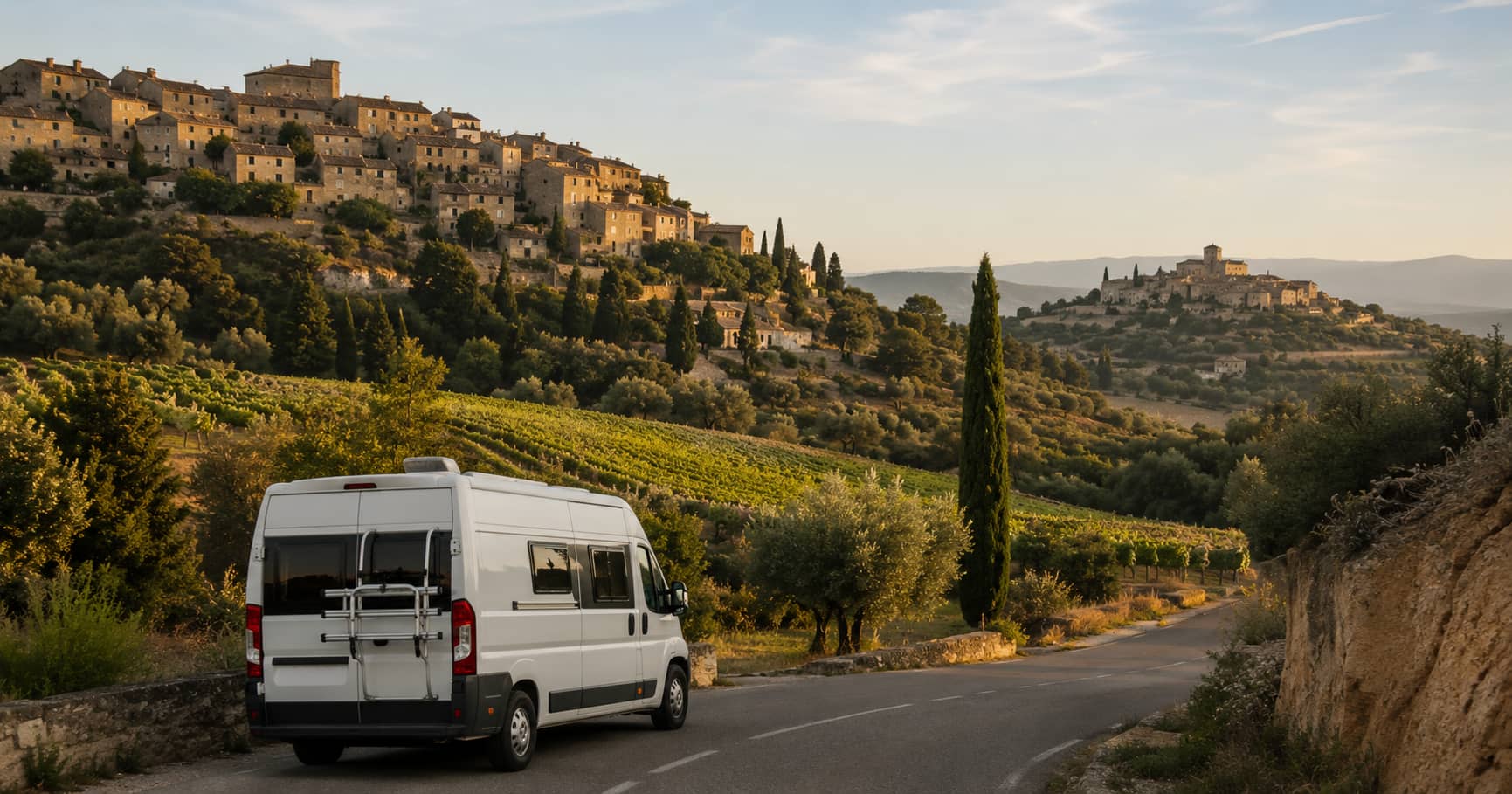
The Luberon is often presented as a string of beautiful villages that can all be visited in one day. That approach works poorly in a campervan. Roads can narrow, central parking may be limited and the time spent entering and leaving each village quickly becomes longer than the visit itself. A better route uses two or three stops and treats the driving as part of the day.
Early September is well suited to this trip because peak August pressure may begin to ease while daylight remains generous. It can still be hot, and market days can transform traffic. Confirm current parking, road works and opening hours before departure, especially if the vehicle is long or above 3.5 tonnes.
Select one side of the Luberon
From Aix, choose a south-Luberon route or a central and northern village route rather than crossing the whole area repeatedly. Lourmarin, Cucuron and Ansouis can form one compact theme. Gordes, Roussillon and nearby villages form another, but they require a longer day from Aix and more parking discipline.
Do not add a village merely because it is 15 kilometres away. Local roads, harvest traffic and slow approaches make distance deceptive. Build the route around the parking locations first, then the attractions. If no suitable legal parking is confirmed, remove the stop.
Visit two main villages and keep one optional
Choose a first village for the morning, a second for lunch or an afternoon walk and a third only if timing remains comfortable. This prevents the day from becoming a sequence of photographs taken near car parks. It also leaves space for a bakery, scenic stop or short walk that was not visible in the original plan.
Market days are attractive but much busier. Arrive before the main rush, expect temporary traffic changes and never use a coach bay or agricultural access because normal spaces are full. If the market is the priority, make it the day’s main event and reduce the rest of the route.
Keep the campervan outside historic centres
Hill villages were not designed for modern touring vehicles. Follow signs for visitor parking and respect height, length and weight limits. Do not follow a small car through an arch or into a lane because the navigation app shows a through route. A legal outer car park followed by a walk is the standard solution.
Park within the marked bay, leave room for turning traffic and avoid extending steps or awnings during a short visit. This is parking, not camping. Carry water, valuables and a lightweight layer, then lock the vehicle without leaving visible bags in the cab.
Plan lunch before the kitchen closes
Village restaurants may have limited service hours and popular terraces fill quickly. Decide whether lunch is a reserved meal, a market picnic or a campsite-prepared lunch. For a picnic, use an authorised area and take all waste away. Do not eat on private field edges or block a viewpoint with the vehicle.
Refill drinking water at the campsite before departure. Public fountains may be decorative, seasonal or not certified as drinking water. A motorhome service requirement is different from filling personal bottles, so use authorised service points for the vehicle’s tank.
Respect a protected working area
The Luberon is a regional natural park and a lived-in agricultural area, not an open-air attraction. Vineyards, orchards and access tracks are workplaces. The park advises visitors to use designated parking, avoid blocking barriers and protect the area from fire. Stay on marked routes and keep noise low near homes.
September can still carry high fire risk. Check the official massif conditions before any woodland walk, especially after dry weather or during mistral. The mistral camping guide explains how wind should change both driving and outdoor plans.
A sample pace from Aix
Leave after an early breakfast, reach the first village before late-morning traffic and spend enough time to walk rather than simply circle the centre. Move to the second stop before lunch, then choose a short optional third stop only if parking is straightforward. Return before fatigue turns the final rural roads into a chore.
Use the Luberon Regional Natural Park for current environmental guidance and local information. A successful campervan route is deliberately incomplete. Seeing fewer villages with calm parking and time on foot gives a better picture of the region than forcing a long checklist into one day.
Check the vehicle before the rural return
Before leaving the final village, walk around the campervan. Make sure roof vents are closed, bicycles are secure and no branch or stone is trapped near the wheels. Rural parking surfaces can be uneven, and a slow inspection is easier than stopping on a narrow road.
Save the campsite entrance as a destination rather than only the town name. Navigation systems can otherwise choose an unsuitable rear approach. Keep the selected return road even if a shortcut appears a few minutes faster.
If the driver is tired, remove the optional village and return early. The value of the route comes from walking and observing, not from reaching a numerical target. A calm arrival leaves enough time to cook, service the vehicle and plan the next day.