Mistral Wind and Camping in Provence: What Campers Need to Know
The mistral is part of travelling in Provence, not a rare weather curiosity. It is a generally dry, turbulent regional wind that can accelerate through the Rhône valley and affect inland campsites, roads and the Mediterranean coast. A clear blue sky can therefore come with conditions that are uncomfortable or unsafe for awnings, tents, cycling and exposed walks.
Météo-France notes that the mistral can blow around 50 km/h on average and reach 80 to 100 km/h in gusts, sometimes more. You do not need extreme figures for a campsite problem: a moderate gust can lift an unsecured awning, slam a door or push a high-sided motorhome across its lane.
Read wind forecasts, not only temperature
A sunny symbol and a comfortable air temperature do not describe the full day. Check sustained wind, gust speed, direction and the timing of changes. Compare the campsite forecast with the coast or mountain location you plan to visit. Conditions at Aix, Sainte-Victoire and Cassis can differ because terrain channels the wind.
Use an official weather source and review alerts before leaving. If gusts strengthen later, complete outdoor cooking and pack loose equipment early. Do not wait until fabric begins snapping to decide whether an awning should come down.
Secure the pitch before the wind arrives
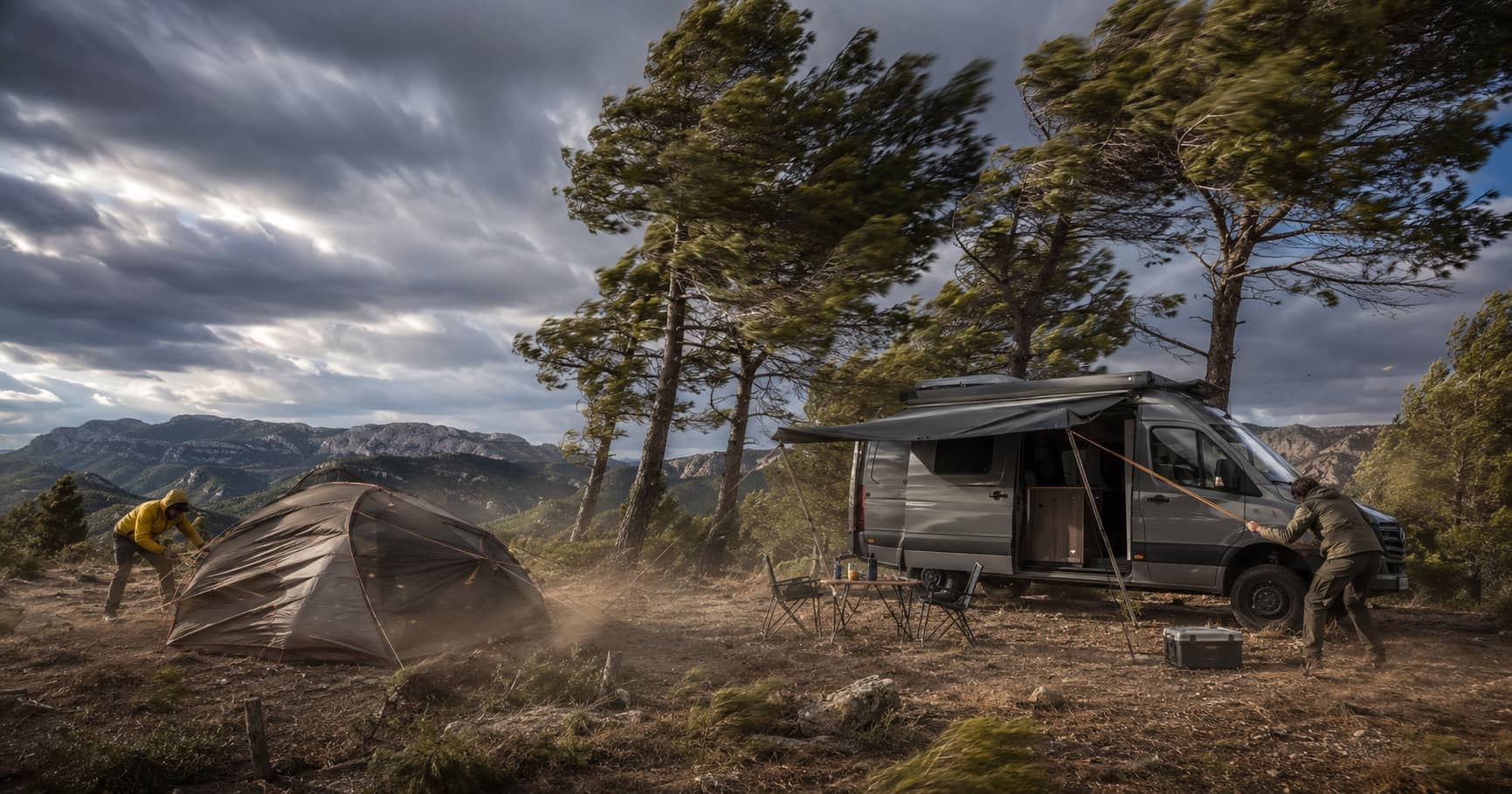
Retract awnings and remove sun canopies when strong wind is forecast, even if they are tied down. Store chairs, drying racks, toys, mats and empty containers inside. Close roof vents according to the manufacturer’s instructions and check that doors cannot swing freely. In a tent, use suitable pegs for the ground, tension guylines evenly and keep sharp objects away from the fabric.
Ask the campsite whether a more sheltered pitch is available, but do not park directly under weak branches. Pine cones and dead limbs can fall in gusts. A hedge or solid structure may reduce wind, while a narrow gap can increase it. Observe how existing trees and flags move before deciding where to place the sleeping area.
Change driving behaviour in a campervan
High-sided vehicles react to crosswinds, especially on bridges, open motorway sections and when leaving the shelter of a cutting. Reduce speed smoothly, increase following distance and hold the steering wheel with both hands. Expect a sudden pull when overtaking a lorry or when the lorry passes you.
If the vehicle feels difficult to place within the lane, stop at a safe authorised area rather than pushing on to meet a timetable. Secure roof equipment and bicycles before departure. A toll-road route may be faster, but it is not automatically safer if an exposed section has severe gusts.
Reconsider cliffs, forests and coastal boats
Strong wind increases fire danger by drying vegetation and spreading flames. It can also lead to forest-access restrictions. Check the daily Bouches-du-Rhône massif status in summer and respect closures. On exposed ridges, gusts affect balance and can make loose gravel more hazardous.
Boat trips may be cancelled or become uncomfortable. A calm campsite does not prove the sea is calm. Contact the operator, understand the cancellation policy and avoid taking anti-sickness medication without following medical advice. For Calanques plans, revisit the Calanques day-trip guide and choose a sheltered alternative.
Cook and use fire with extra caution
Follow the campsite’s fire and barbecue rules exactly. Wind can carry sparks far beyond the pitch, and summer restrictions may prohibit equipment that is normally allowed. Position legal cooking equipment on a stable surface away from dry vegetation, never leave it unattended and have a safe way to shut it down quickly.
Do not create a windbreak from flammable fabric around a hot stove. If conditions are poor, switch to a cold meal or use authorised indoor facilities. The inconvenience is minor compared with the consequences of a fire in dry Mediterranean vegetation.
Use the mistral as a planning signal
Mistral days can bring clear visibility and lower humidity, making sheltered town visits attractive. Aix museums, markets and cafés may work better than exposed mountain or coastal plans. Keep one indoor and one low-level option in the itinerary so the weather changes the day rather than cancelling the holiday.
Check the Météo-France forecast and the official forest-access status before setting out. Pack the pitch early, drive conservatively and do not judge wind by the appearance of the sky. In Provence, blue weather can still demand serious preparation.
Inspect equipment after the strongest gusts
When the wind eases, check pegs, roof accessories, bicycle covers and external cables before assuming everything is intact. Fabric can loosen without tearing, and a shifted cable may rub against a sharp edge. Make repairs in daylight rather than waiting until the next windy night.
Look under and around the vehicle for branches or debris before driving away. Ask campsite staff whether local roads have closures or fallen trees. A weather alert can end while secondary effects remain.
Record which pitch orientation and equipment choices worked. That information is useful later in the trip because mistral often returns in episodes. A repeatable packing routine is faster and safer than reacting from the beginning each time.