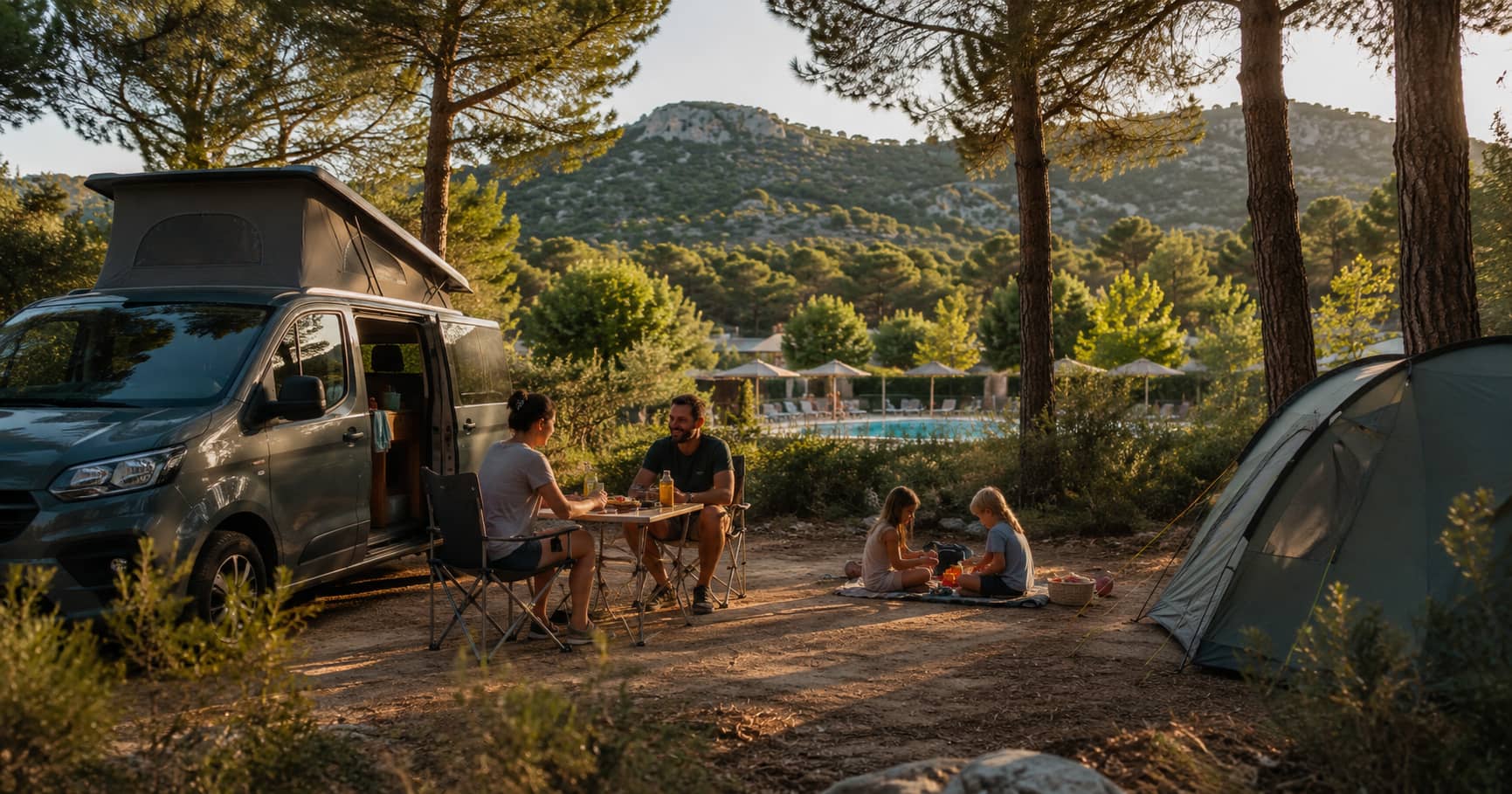
Camping in Provence with Children: A Realistic Family Plan
Provence can be an excellent family camping destination, but summer success depends less on the number of attractions and more on managing heat, sleep, water and driving. Children who are comfortable at breakfast can be exhausted after an exposed village walk or a long queue for parking. A family plan should therefore protect the daily routine before adding sightseeing.
This guide is designed for campsite, campervan and mobile-home stays near Aix-en-Provence. It focuses on practical decisions: selecting facilities, controlling the hottest hours, preparing short outings and keeping one adult from spending the whole holiday solving logistics.
Choose the site for the hardest part of the day
Look at the pitch or accommodation between late afternoon and bedtime, not only in attractive morning photos. Western sun can heat a tent or vehicle just when children need to rest. Ask about actual shade, ventilation, quiet hours, distance to toilets and whether cars move through the sleeping area after dark.
A pool is useful, but it should not replace shade or safe drinking water. Check supervision rules, depth, opening hours and whether swimwear restrictions apply. For toddlers, the distance from the pitch to toilets and washing facilities often matters more than a large activity programme.
Use a two-part day
Plan the active outing early, return for lunch and rest, then use late afternoon for the pool, a short walk or a simple town visit. This rhythm avoids pushing children through the strongest heat and keeps the campsite part of the holiday rather than treating it only as a place to sleep.
If an outing requires a long drive, make it the only major objective. Sainte-Victoire, Marseille and the Calanques each need different preparation. Do not combine a morning hike with a crowded coastal afternoon because the map shows they are in the same region. The summer heat guide provides a fuller routine for hot days.
Pack for repeated small problems
Keep hats, refillable water bottles, sunscreen, a basic first-aid kit and spare clothes in one day bag. Add oral rehydration supplies recommended for your family, any regular medicine and a digital or paper copy of health information. Store medicine according to its temperature instructions; a parked vehicle can become extremely hot.
Bring shoes that stay secure on rocky paths, not only sandals. A lightweight picnic cloth creates a clean rest area, while a small torch helps with night-time toilet trips. For babies and toddlers, test the sleep setup before travelling so you know how blackout, airflow and mosquito protection work together.
Keep water and food simple
Children may not recognise thirst while playing, so schedule drinks rather than waiting for a request. Refill at the campsite before every departure and carry more than the planned outing appears to require. Do not depend on finding a shop at a trailhead or small village during the afternoon closure period.
Use meals that tolerate disrupted timing: bread, fruit, cheese stored safely, cut vegetables and a simple cooked dinner at camp. In high heat, food safety matters. Keep cold items in a reliable refrigerator or cooler, minimise the time they spend in a hot vehicle and clean shared surfaces regularly.
Make driving part of the safety plan
Fit and test child seats before the trip. Secure loose objects inside the campervan, including bottles, cooking equipment and toys. A sudden stop can turn ordinary campsite items into projectiles. Schedule breaks before children become uncomfortable, and avoid starting a complex city approach at the same time as a meal or nap.
For Aix, leave the large vehicle outside the centre and use park-and-ride or campsite transport where possible. The Aix campervan parking guide explains the main constraints. Walking a little farther from a simple bus stop is often easier than unloading children beside busy traffic.
Give the family permission to cancel
Fire restrictions, mistral, illness or poor sleep can turn a planned outing into the wrong choice. Keep a low-effort option for every day: a shaded park, a market visit, a campsite morning or an indoor cultural stop. Cancelling a difficult plan early is better than continuing until everyone is overtired.
A good family camping trip has space between highlights. Choose a site that works during ordinary hours, build outings around the coolest part of the day and repeat routines that children understand. Provence offers enough variety that you do not need to force every famous location into one week.
Set campsite rules children can follow
Agree on clear boundaries as soon as you arrive: where children may cycle, how far they can go alone and what to do if they lose sight of the pitch. Point out reception, toilets and a fixed meeting place. Campsites mix pedestrians, bicycles and moving vehicles, so familiar home-road habits do not always transfer.
Give each child a small torch and teach them not to shine it into neighbouring tents. Use reflective details on bikes and supervise movement after dark. Keep guy lines visible and store toys before bedtime so nobody trips during a night-time toilet visit.
Build one daily responsibility into the routine, such as refilling personal water bottles or checking that shoes are inside before rain. Small tasks help children understand the campsite and reduce the number of things one adult must remember.