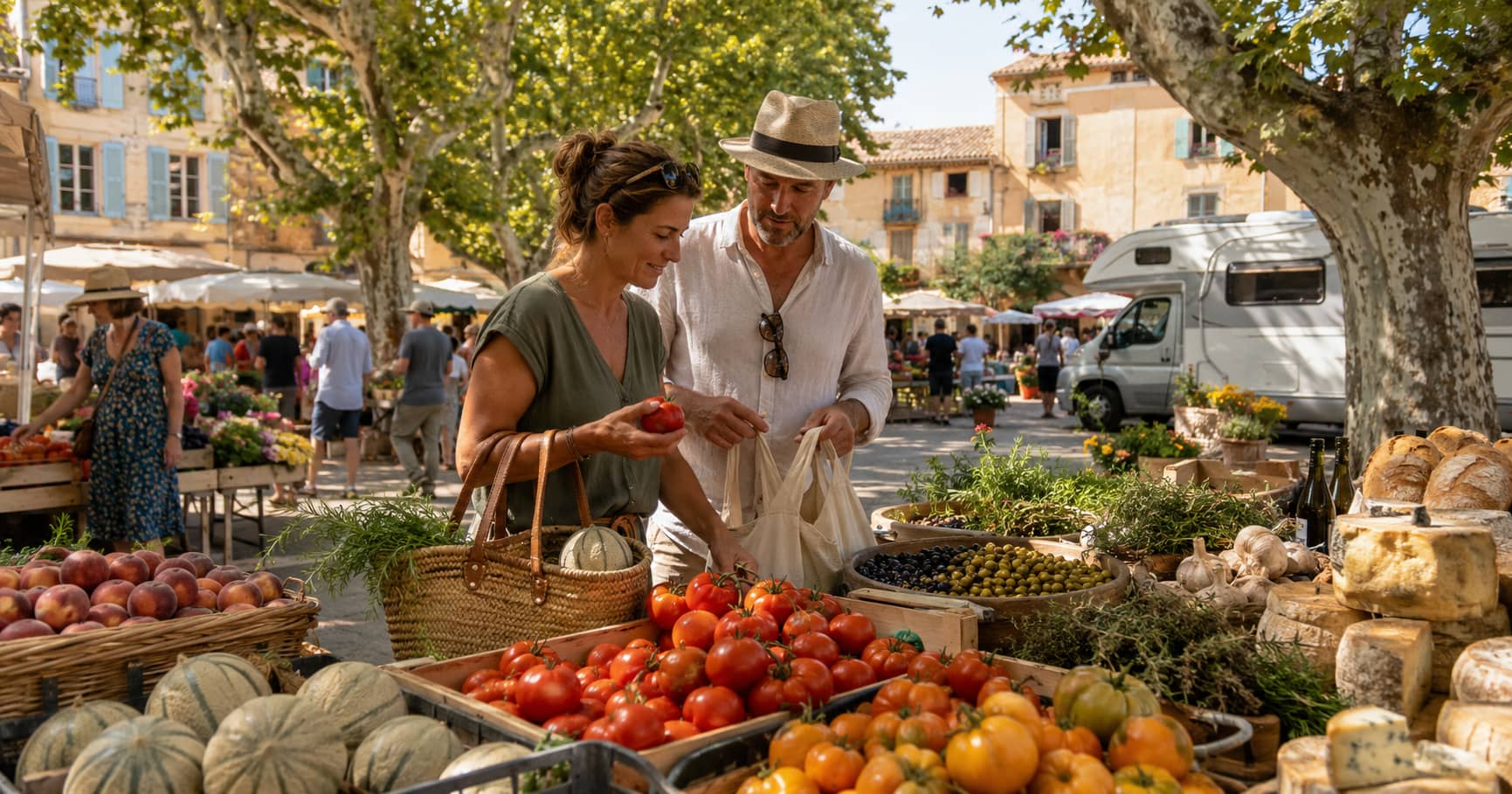
Using Provence Markets for Campsite Meals and Supplies
A Provence market can supply an excellent campsite meal, but it is not a complete supermarket replacement. Markets are strongest for seasonal produce, bread, cheese, olives, prepared foods and regional products. They are less reliable for gas fittings, specialised vehicle parts, medicine or a full week of cold-chain groceries.
In November, markets may be quieter and smaller than in summer. That can make shopping easier, but opening patterns and stall numbers vary. Confirm the official market day and arrive with a short list, a reusable bag and a plan for storing food safely.
Shop for one or two meals at a time
Limited refrigerator space encourages sensible buying. Choose ingredients for a simple lunch and dinner, then restock later. Tomatoes, salad, fruit, bread and a cooked item can create a meal without filling every cupboard. Avoid buying large quantities because a stall display looks attractive.
Ask how products should be stored and use an insulated bag for cheese, meat and prepared foods. Return to the campsite promptly. A closed vehicle can heat up even outside midsummer, and cold food should not sit in the cab while you continue sightseeing.
Build a campsite meal from market strengths
Start with bread, add vegetables or fruit, choose one protein or cheese and finish with a shelf-stable item such as olives. For a hot dinner, buy ingredients that use one pan and little water. This reduces washing and keeps cooking manageable after a day trip.
Check campsite rules before using a barbecue or outdoor stove. In windy or fire-risk conditions, prepare a cold meal or use an authorised communal area. The mistral guide explains why a clear day can still be unsuitable for exposed cooking.
Understand market timing
Many markets are morning events and begin packing before lunch. Arrive early enough to shop without rushing, but not so early that you wait in a large vehicle near delivery traffic. Use an outer car park and walk in with bags. Market streets may close temporarily to vehicles.
A market day can increase parking pressure across a small town. If the market is the main purpose, do not attach several village stops. The Luberon campervan route recommends treating a major market as the centre of the day.
Separate food shopping from vehicle supplies
For toilet chemicals, electrical adapters, gas components, hose fittings and repair materials, use a specialist retailer or campsite service. Gas bottle systems differ between countries, and an improvised connection is unsafe. Check compatibility before the trip rather than expecting a village market to solve it.
Buy medicine only through an appropriate pharmacy and follow storage instructions. Keep emergency food, drinking water and basic hygiene supplies in the vehicle so a closed shop does not create a problem. Markets add quality and local character; they should not be the only logistics plan.
Reduce packaging and manage waste
Carry produce bags and containers where the seller permits them. Buy quantities you can finish and separate recycling according to the campsite system. Do not leave food waste outside overnight because it attracts animals and insects.
Composting availability varies. Ask the campsite before placing food in any green-waste area. Oil, cooking liquid and grey water need proper disposal; never empty them onto the pitch or into a roadside drain.
Make the market part of a practical day
Combine shopping with a short town walk and return to the campsite for lunch. This works especially well in cooler months when daylight is limited. It also lets you store food correctly before the afternoon outing.
Check the municipality or tourist office for current market information rather than relying on an old weekly list. A successful market visit gives you a good meal and a manageable load, not a vehicle full of fragile products with no refrigeration space.
Ask simple questions at the stall
Confirm whether a product is ready to eat, needs refrigeration or should be cooked the same day. Ask the price by item or kilogram before ordering an uncertain quantity. Clear questions prevent waste and help you buy portions suited to a small campsite kitchen.
Carry small cash as well as a card because payment methods differ between vendors. Keep money secure and move away from the busiest front of the stall before reorganising bags. This keeps the lane open for residents and other shoppers.
Photograph or write down the name of an unfamiliar ingredient and its preparation instructions. A local product is useful only if you can store and cook it safely with the equipment at the pitch.
Protect purchases on the walk back
Pack soft fruit and bread above tins, bottles and jars. Keep chilled products together in the insulated bag and avoid leaving them in direct sun while taking photographs or stopping for coffee. Return to the campsite before beginning a second sightseeing loop.
Once stored, wash reusable bags that carried raw or leaking food. A small cleaning routine prevents odour and cross-contamination inside limited campervan storage.